
NFC Eco Business Cards: Modernising Networking at Seychelles Hospitality Trade Shows
The paper business card is an anachronism at an industry event centred on sustainable hospitality. NFC-enabled eco business cards in wood and PPHbio replace single-use paper with a tap-to-connect experience that is more functional, more memorable, and more consistent with Indian Ocean hospitality values.
The Seychelles MICE Context
Seychelles is an emerging MICE (Meetings, Incentives, Conferences & Events) destination with infrastructure centred on Mahé and several dedicated conference facilities within luxury resort properties. The archipelago's positioning as an eco-luxury destination creates a natural alignment with event formats that minimise waste and communicate sustainability credentials — an expectation that extends to the materials distributed at events, including business cards.
Hospitality trade shows — including the Seychelles Tourism Board's annual trade events, regional travel trade shows connecting Seychelles with European and Asian source markets, and hotel industry supplier events — bring together hundreds of hospitality professionals exchanging contact information. The environmental and logistical waste generated by thousands of paper or plastic business cards at these events sits in uncomfortable contrast with the sustainability message the Seychelles hospitality sector is collectively trying to project.
How NFC Eco Business Cards Work
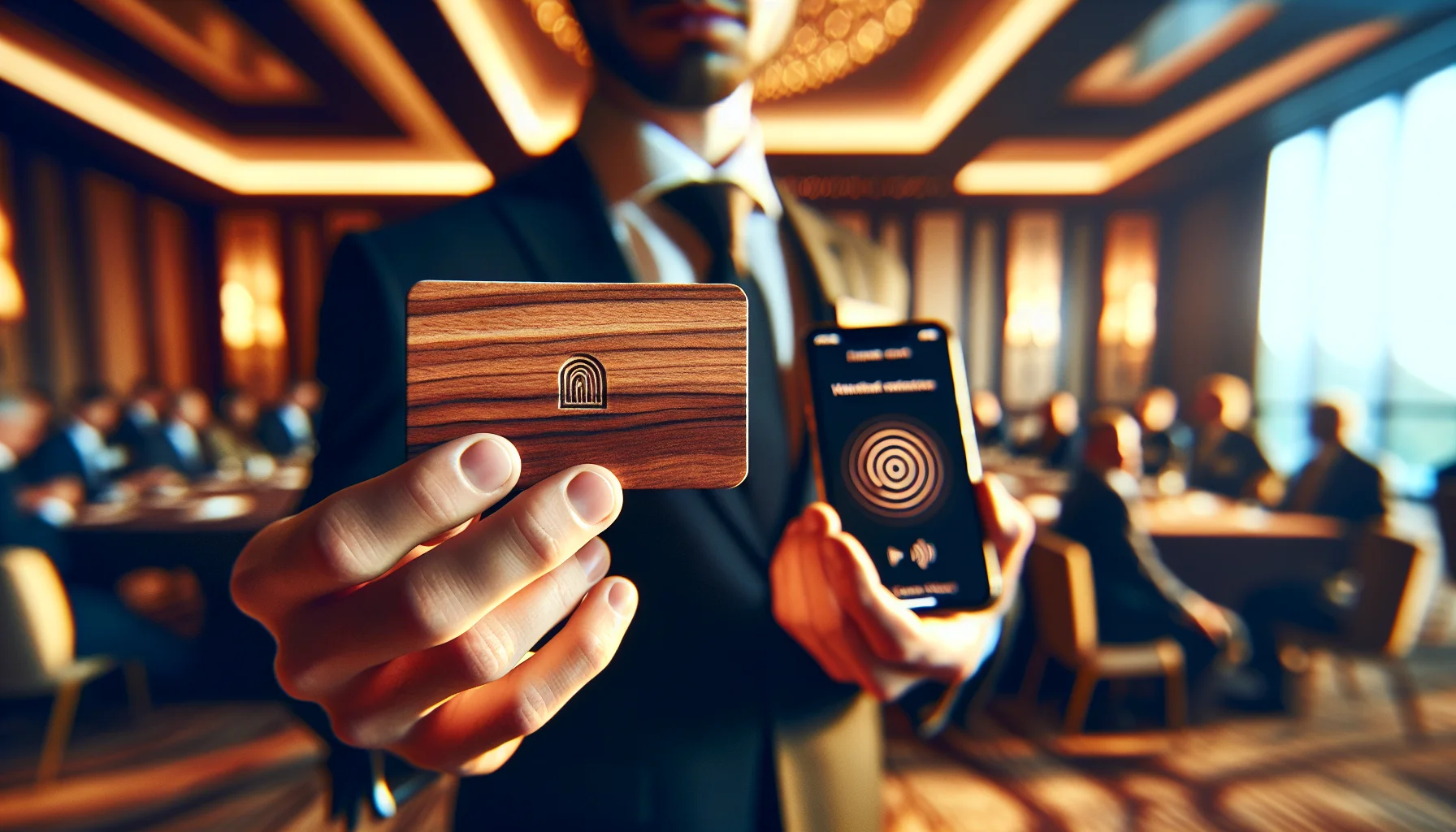
An NFC eco business card contains an NTAG215 chip (the NFC Forum Type 2 standard used in modern NFC business cards, read range 1–4cm) with an embedded flat coil antenna, encapsulated within a wood or PPHbio card body manufactured to standard CR80 dimensions. The card holds a programmed NFC Data Exchange Format (NDEF) record — typically a URL pointing to a digital contact page, LinkedIn profile, or vCard download endpoint.
When a recipient taps their NFC-enabled smartphone to the card, the phone's NFC reader detects the NTAG215 chip, reads the NDEF URL, and automatically opens the target page in the device's browser — no app required. iPhones (from iPhone 7, with iOS 13+) and Android devices (the majority of Android phones since 2011) support NFC tap-to-open functionality natively. The interaction takes under one second and transfers the contact's digital presence without any physical exchange of typed data.
The NDEF record can be programmed to open any URL — a personal website, LinkedIn profile, hotel contact page, booking portal, or a smart link service (such as Linktree, Beacons, or Popl) that aggregates multiple links in one tap. The content linked can be updated remotely at any time without replacing the physical card — a significant advantage over printed business cards where any information change requires new print runs.
Materials: Wood vs PPHbio for NFC Cards
Both FSC-certified wood and PPHbio plant-based substrates are suitable for NFC business card production. The choice reflects the cardholder's brand aesthetic and sustainability positioning:
Wood NFC Cards: Laser-engraved wood cards offer a premium, luxury-adjacent aesthetic with visible grain and natural variation in each card. Maple, walnut, bamboo, and ebony are common choices. Laser engraving allows for crisp, precise monochrome branding without printing ink. Suitable for hotel general managers, luxury sales directors, and senior hospitality executives.
PPHbio NFC Cards: Plant-based PPHbio cards allow full CMYK colour printing while maintaining eco-credentials. The card surface accepts the same printing processes as conventional PVC cards — offset, digital UV — enabling full brand colour fidelity. Suitable for corporate hotel groups with defined brand colour standards, tour operator sales teams, and hospitality suppliers.
Both materials provide NFC chip encapsulation that is mechanically stable under normal card handling — wallet storage, hand-to-hand exchange, brief contact with liquids. The chip capsule has an expected functional lifespan of 3–5 years under normal use conditions.
Comparing with Paper and PVC Alternatives
Standard paper business cards — typically 300–400gsm coated board — are technically recyclable in most paper recycling streams, but laminated or foil-printed cards (common in luxury hospitality contexts) are not recyclable. The laminate coating contaminates the paper fibre, resulting in landfill disposal despite appearing as paper. Approximately 10 billion business cards are printed globally each year — the majority are discarded within a week of exchange.
Conventional PVC business cards — a premium segment choice — face the same end-of-life challenge as PVC hotel keycards: no recycling pathway, plastic landfill or incineration at end of life. Their premium tactile experience is undermined by their environmental profile in a market context where sustainability is a core brand value.
NFC eco business cards are not one-use objects — they are retained by their owner and reused at every networking opportunity. The single card that replaces potentially hundreds of paper cards handed out over its lifespan generates a compounding environmental advantage over time. The NDEF record can be reprogrammed when the cardholder changes role or organisation, extending the card's functional lifespan further.
For Hotel Staff and Resort Concierges
NFC eco business cards are particularly suited to hotel concierge and guest relations roles in the Indian Ocean luxury segment. A concierge handing a guest a wood NFC card — which taps to open the resort's digital contact page, local guide, or concierge WhatsApp — creates a premium touchpoint that reinforces the property's brand values. The card functions as a lasting, tactile reminder of the stay that can be used to contact the hotel for future booking enquiries.
For hotel sales teams attending international travel trade shows, a sustainable NFC card communicates both technological sophistication and environmental values simultaneously — a combination that resonates with tour operators and travel agents sourcing eco-certified properties for their high-value clients.