
RFID Wristbands Enable Cashless Beach Bar Payments at Indian Ocean Resorts
The all-inclusive resort model has long relied on wristband identification. The integration of RFID technology into eco-wristbands transforms them from a simple visual identifier into a cashless payment credential — eliminating wallet-on-the-beach friction and increasing beach bar revenue simultaneously.
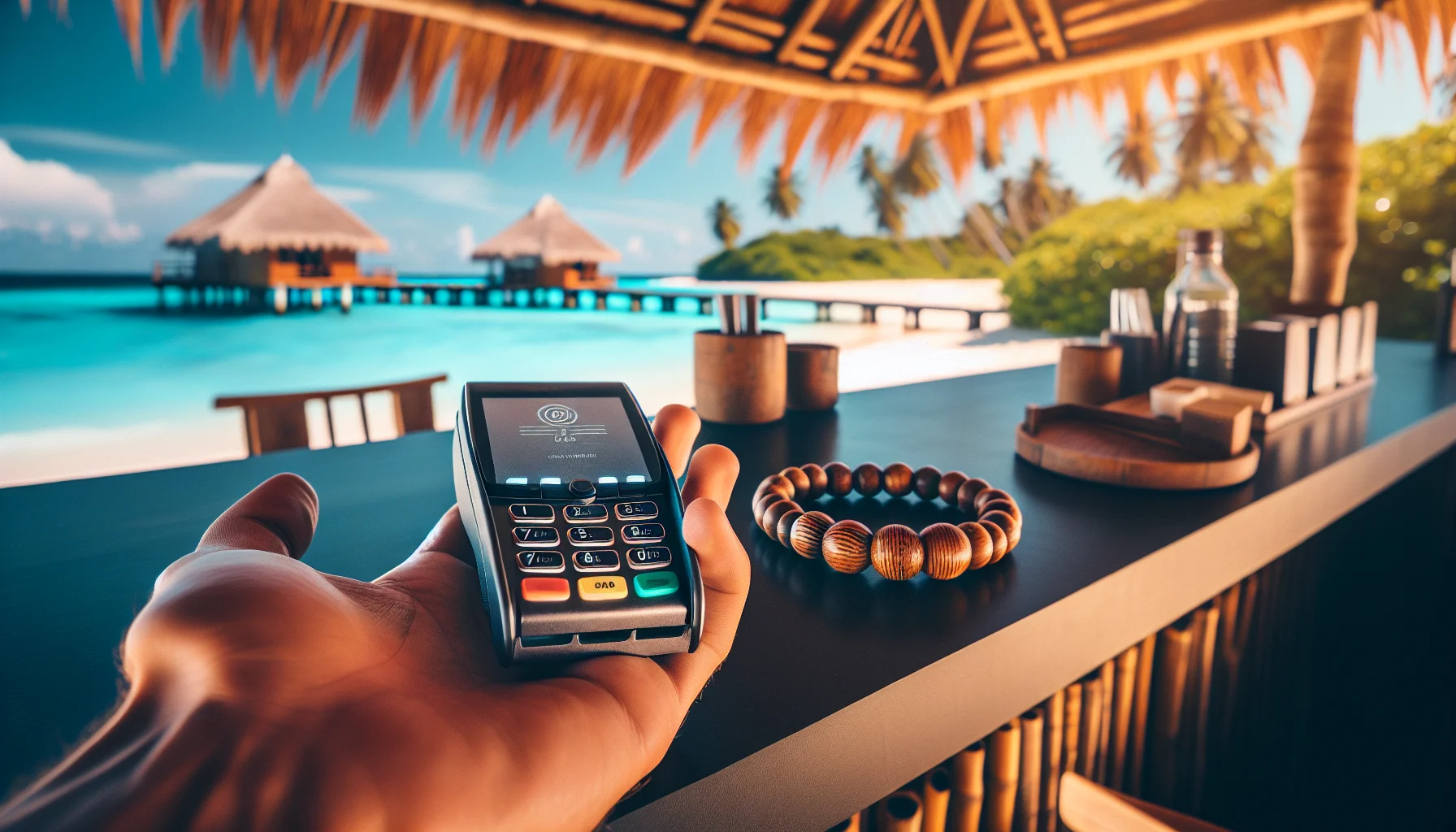
The Beach Bar Problem
The beach bar represents one of hospitality's most operationally challenging revenue venues. Guests arrive barefoot, in swimwear, without wallets or phones — the normal apparatus of payment. Conventional solutions — room-charge via a written chit system, wristband colour coding for all-inclusive tiers, or paper vouchers — all introduce friction that reduces guest spending or increases operational complexity.
RFID wristbands linked to guest accounts resolve this friction at the hardware level. The guest taps their wrist on a POS reader, the system identifies the guest's account (whether an all-inclusive credit limit or a direct-charge account), and the transaction is processed instantly. No wallet, no phone, no cash, no chit — just the wristband that the guest is already wearing for room access.
The Technical Architecture
A complete RFID cashless payment system for a resort beach bar comprises several interconnected components:
RFID Wristbands with MIFARE DESFire EV2: The DESFire EV2 chip (from NXP Semiconductors) provides AES-128 encryption and mutual authentication — significantly more secure than MIFARE Classic 1K for financial transaction applications. The DESFire EV2's multi-application architecture allows the same chip to simultaneously carry the room access credential (in one application) and the cashless payment credential (in a separate application), without either application interfering with the other.
Point-of-Sale (POS) Readers: RFID-enabled POS terminals — typically integrated into standard hospitality POS systems — read the DESFire application data, retrieve the guest's account identifier, and communicate with the PMS or cashless system backend to authorize the transaction. Read range is 2–5 centimetres for payment applications (closer than access control applications for added security).
Central Cashless System / PMS Integration: The guest's wristband RFID UID is linked to their room reservation record in the property management system (PMS) at check-in. The cashless system maintains a running account of charges and, for all-inclusive properties, a credit balance or consumption tracking system. Popular hospitality PMS platforms including Infor HMS, Oracle OPERA PMS, and Mews have RFID integration capabilities either natively or via middleware.
Revenue and Operational Impacts
The hospitality technology industry has documented consistent patterns in RFID cashless deployment outcomes across resort properties globally:
Resort properties deploying RFID cashless payment systems consistently report increases in ancillary revenue — beach bar, spa, equipment rental, excursion booking — compared to pre-deployment baselines. The removal of payment friction reduces the psychological barrier to purchase decisions, particularly for impulse purchases at the beach bar.
Cash handling costs and loss reduction are measurable benefits. Beach and pool bar environments are high cash-theft-risk contexts. RFID cashless systems eliminate cash from the transaction entirely, reducing both theft risk and the labour cost of cash reconciliation.
Staff efficiency improves as transaction times decrease — the typical RFID tap-and-confirm transaction completes in under two seconds, compared to 20–40 seconds for cash handling or written chit completion. This throughput improvement translates to shorter queues at busy beach bar periods and either reduced staffing requirement or higher per-staff revenue at the same staffing level.
Eco Wristbands in Cashless Systems
The sustainability advantage of eco-wristbands — organic cotton, wood bead, or biodegradable silicone — is fully compatible with cashless payment deployment. The RFID chip and its DESFire EV2 application data are embedded in a waterproof capsule that performs identically to conventional wristband chips regardless of the outer wristband material.
For Indian Ocean properties committed to plastic reduction programmes, deploying organic cotton or wood bead wristbands with MIFARE DESFire EV2 chips for both room access and cashless payments delivers the full technological capability of the system without the plastic wristband that conventional all-inclusive properties have historically used.
The tactile and aesthetic quality of eco-wristbands — particularly organic cotton and wood bead designs — is well-suited to the luxury Indian Ocean market, where the wristband must represent the property's brand positioning throughout the guest's stay. A natural wood bead wristband that opens the villa door, charges cocktails at the beach bar, and accesses the spa is a premium, brand-consistent experience that a bright plastic wristband cannot replicate.
Implementation Considerations
Properties considering RFID cashless deployment should evaluate PMS integration requirements early. Most modern PMS platforms support RFID integration through APIs, but older or heavily customised systems may require middleware. POS hardware procurement — RFID-enabled countertop and mobile POS terminals — is a capital investment that should be scoped against projected revenue uplift over a 3–5 year horizon.
All-inclusive properties with defined drink and dining credit systems need to configure credit limit logic in the cashless backend — distinguishing between included consumption and additional-charge items. This requires close collaboration between the resort operations team and the technology integrator during system setup.
For properties beginning with a simpler implementation, a room-charge RFID system (where the wristband simply identifies the guest for manual room charge processing) requires significantly less integration complexity than a full real-time cashless system, while still providing the friction-elimination benefit at the beach bar. This phased approach allows properties to demonstrate operational value before committing to the full cashless infrastructure investment.